- Shehr Yar
- 2 September, 2026
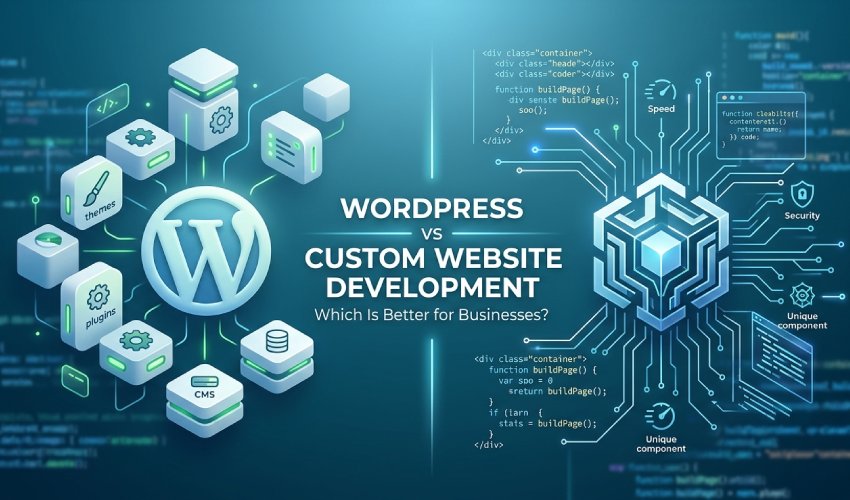
Choosing how to build a website is one of the first major decisions a business faces, and it often comes down to one key question: WordPress vs custom website development. Both approaches can produce excellent results, but they serve different needs, budgets, and long-term goals. Understanding the difference helps businesses make a decision that actually fits their situation, rather than following a trend.
This article breaks down what each option involves, how they compare, and which approach tends to work best in different scenarios.
What WordPress and Custom Development Actually Mean
WordPress is a content management system that allows websites to be built using pre-designed themes and plugins. It offers a faster, more accessible way to create a website without writing code from scratch. Much of the structure and functionality already exists, and customization happens through themes, plugins, and built-in tools.
Custom website development, on the other hand, involves building a website entirely from scratch using code tailored specifically to a business’s needs. Instead of relying on pre-made themes or plugins, developers design and build every element based on exact requirements.
Both approaches can produce professional, high-performing websites, but the process and flexibility behind each differ significantly.
Why This Decision Matters
The platform a business chooses affects far more than just the initial build. It influences loading speed, scalability, design flexibility, and how easily the website can grow alongside the business. Choosing the wrong approach can lead to limitations later, whether that’s slow performance, difficulty adding new features, or a website that feels generic rather than tailored.
This is why comparing WordPress vs custom website development early in the planning process helps avoid costly changes down the line.
Key Differences Between the Two Approaches
Development Speed
WordPress websites are typically faster to build, since much of the foundational structure already exists. Custom development takes longer, as every element is built specifically for the project, but this extra time often results in a website tailored more precisely to business needs.
Flexibility and Customization
WordPress offers flexibility through themes and plugins, which works well for many standard business websites. Custom development, however, offers complete control over design and functionality, making it a better fit for businesses with specific or complex requirements that pre-built solutions can’t easily support.
Performance and Speed
Custom-built websites often perform better in terms of speed, since the code is written specifically for that site, without unnecessary plugins or unused features. WordPress websites can also perform well, but performance often depends on how many plugins are used and how well the site is optimized.
Maintenance and Updates
WordPress requires regular updates to themes, plugins, and the core system itself to remain secure and functional. Custom websites require maintenance too, but updates are typically more controlled since there are fewer third-party dependencies involved.
Cost Considerations
WordPress is generally more cost-effective upfront, making it a practical choice for smaller businesses or simpler websites. Custom development often involves a higher initial investment, but this can pay off for businesses needing advanced functionality or long-term scalability.
When WordPress Makes Sense
WordPress tends to work well for:
- Small to medium-sized business websites
- Blogs, portfolios, or content-focused sites
- Businesses needing a functional website quickly
- Projects with limited budgets
Its flexibility and wide range of themes make it a practical starting point for many businesses.
When Custom Development Makes Sense
Custom development tends to be a better fit for:
- Businesses with unique or complex functionality needs
- Websites requiring high performance at scale
- Projects where long-term flexibility is a priority
- Businesses wanting complete design control without platform limitations
While it often requires a larger initial investment, custom development can offer stronger performance and scalability over time.
Practical Tips for Making the Right Choice
- Consider both current needs and future growth before choosing a platform
- Avoid overloading WordPress websites with too many plugins
- For complex functionality, evaluate whether custom development offers better long-term value
- Prioritize performance and security regardless of which approach is chosen
- Consult with an experienced developer to assess specific business requirements
Making this decision thoughtfully, rather than defaulting to one option, often leads to better long-term results.
A Practical Example
Consider a growing business that started with a simple WordPress website but eventually needed advanced functionality that standard plugins couldn’t support efficiently. Transitioning parts of the site to custom development allowed for better performance and more precise control over specific features. This kind of practical, needs-based approach is something developers like Shehryar Dev often emphasize, recommending the right solution based on actual business requirements rather than a one-size-fits-all approach.
Final Thoughts
There’s no universal answer to WordPress vs custom website development, the right choice depends on a business’s specific needs, budget, and long-term goals. WordPress offers speed and accessibility, while custom development offers greater control and scalability.
Understanding these differences helps businesses make a more informed decision, ensuring the website they build today can continue to support their growth well into the future.

Related Post